Equip Your Front Line
Your managers spot a struggling team member before anyone else — but most have never been trained for that moment. Danny gives them the confidence and the words, backed by lived experience and MHFA accreditation.
Why Managers, Why Now
Ask anyone who has struggled at work who they told first, and it's rarely HR or occupational health — it's their line manager, or no one at all. Managers are the front line of workplace mental health. They set the tone of a team, they notice when someone goes quiet, and they hold the conversation that can change everything. Yet the vast majority have never had a minute of training for it.
The stakes are higher than most realise. Research from the Workforce Institute found that people's managers have a bigger impact on their mental health than their doctor or therapist — and as much as their partner. That influence cuts both ways: a manager who knows what to say is a lifeline; one who fumbles it, or misses it entirely, can make things worse.
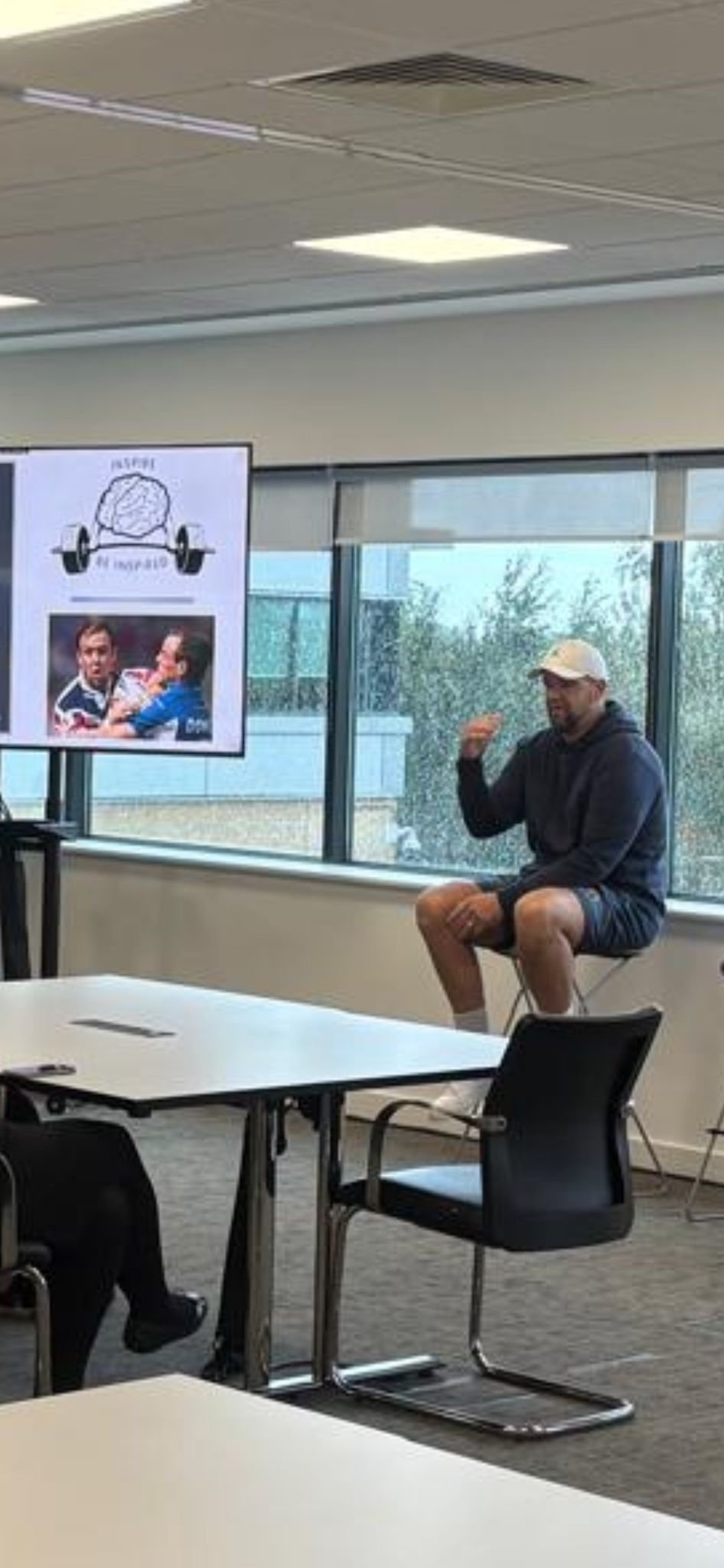
Danny Sculthorpe's manager training closes that gap. A former professional rugby league player who came close to taking his own life, and now a certified MHFA instructor, he trains managers in the real, human skills the job demands: how to notice, how to open up a conversation, what to do next — delivered with a story that makes it land and stick.
69%
of people say their manager has as much impact on their mental health as their partner — more than their doctor or therapist.
Source: The Workforce Institute at UKG
Training Options
"A trained manager is the difference between a team member who quietly burns out and one who feels safe enough to say 'I'm struggling' — while there's still time to help."
Train Your ManagersWhat Managers Learn
No jargon, no tick-box e-learning. Practical tools your managers can use the very next day.
Recognise the early, easily-missed changes — in mood, behaviour and performance — that signal someone is struggling.
How to open up a supportive chat, what to say, what not to say, and how to listen without trying to "fix" it.
Practical, proportionate changes that help someone stay in work and recover — and where the employer's duty sits.
Know your EAP, occupational health, MHFAiders and external services — and how to hand over safely.
Create a team culture where people feel safe to speak up early, before a wobble becomes a crisis.
Managers carry a load too. How to support others without burning out — and where their own limits are.
Common Questions
Why do managers need mental health training?
Line managers are the front line of workplace mental health — they usually notice a problem before HR or anyone else does, yet most have never been trained for it. Research from the Workforce Institute found managers affect employees' mental health more than their doctor or therapist, and on a par with their partner. Training turns that influence into a positive.
What does mental health training for managers cover?
Spotting the early signs of poor mental health, how to start and hold a supportive conversation, making reasonable adjustments, signposting to the right help, and building a team culture where people feel safe to speak up — plus how managers protect their own wellbeing.
Is mental health training for managers a legal requirement?
Employers have a legal duty of care for the health — including mental health — of their staff. While no specific course is mandated by law, training managers is one of the clearest ways to meet that duty and reduce stress-related absence and risk.
How long is the training and can it be delivered on site?
It's flexible — from a focused half-day workshop to full MHFA-accredited training — delivered in person at your workplace or online, anywhere in the UK.
What's the difference between a trained manager, a champion and a first aider?
A trained manager supports their own team day to day. A mental health champion is a volunteer who raises awareness across the organisation. A Mental Health First Aider is trained to spot a crisis and signpost help. The strongest workplaces combine all three.
Ready to Equip Them?
Tell Danny about your teams and he'll shape training that fits — his team replies within 24 hours.